The Indian automotive landscape is evolving fast. Cars are no longer just machines for commuting; they are becoming smart, data-driven, and digitally connected. This shift has led to the rapid adoption of connected cars in India, a technology that is redefining how people drive, maintain, and interact with their vehicles.
From real-time navigation to remote vehicle monitoring, connected cars are transforming everyday mobility into a seamless digital experience.
What Are Connected Cars
Connected cars are vehicles equipped with internet connectivity and smart technologies that allow them to communicate with drivers, manufacturers, service providers, and even other vehicles.
These cars use a combination of:
- Embedded SIM cards
- Sensors and telematics systems
- GPS and cloud connectivity
- Mobile apps and digital dashboards
The result is a car that can send and receive data in real time, making driving safer, more efficient, and more convenient.
A connected car is a vehicle that stays digitally linked to your smartphone, service network, and navigation systems, offering real-time information and remote-control features.
How Connected Cars Work
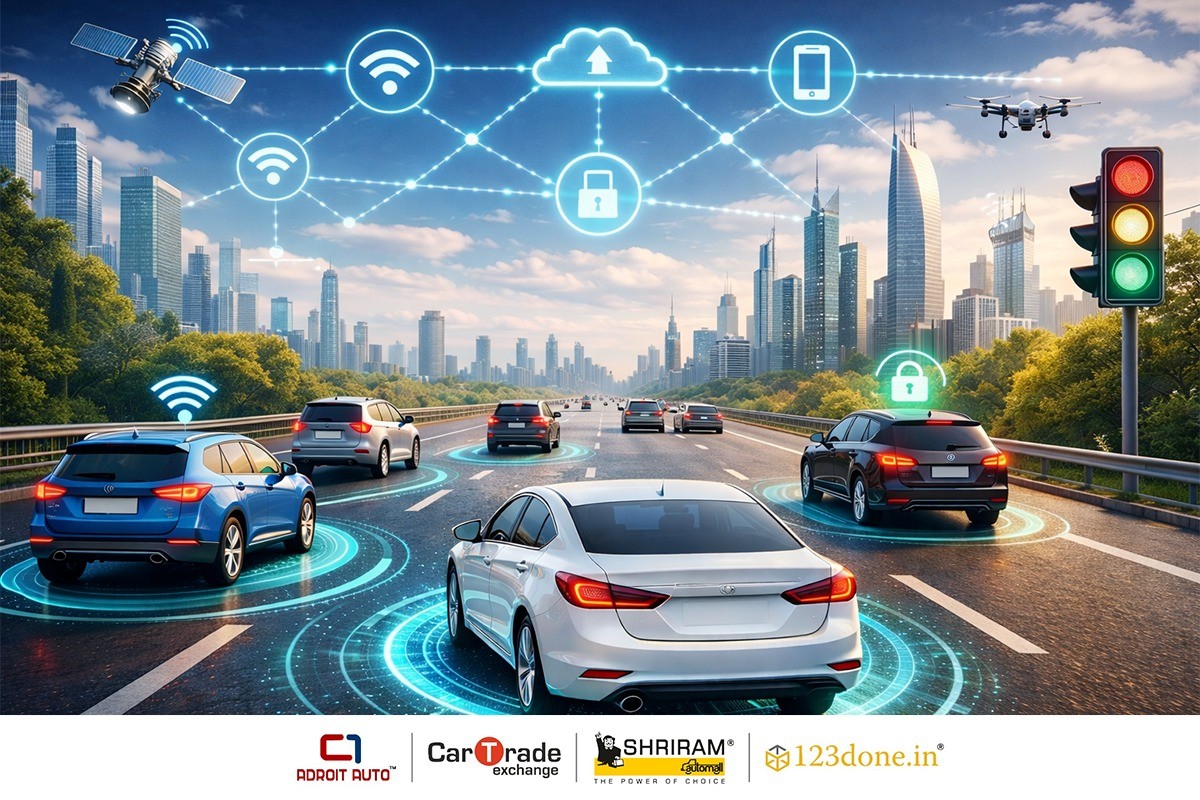
Connected cars rely on Vehicle-to-Everything (V2X) communication. This includes:
- Vehicle-to-Mobile (apps and alerts)
- Vehicle-to-Cloud (data storage and analytics)
- Vehicle-to-Service (maintenance and diagnostics)
Data collected from the car is processed and shared to deliver actionable insights such as traffic updates, vehicle health alerts, and driving behaviour analysis.
Key Features of Connected Cars in India
Connected car features are designed to enhance safety, comfort, and control. Below are some of the key features of connected cars:
Real-Time Vehicle Tracking
Owners can track their cars live location using mobile apps, which is especially useful in cases of theft or fleet management.
Remote Car Access and Control
Drivers can lock or unlock doors, start the engine, turn on climate control, or check fuel levels remotely.
Navigation and Traffic Updates
Connected navigation systems provide real-time traffic updates, route optimisation, and nearby service alerts.
Vehicle Health Monitoring
The system monitors engine performance, battery health, tyre pressure, and other critical parameters, alerting users before issues become serious.
Emergency Assistance
In case of an accident, connected cars can automatically send alerts to emergency services with location details.
Benefits of Connected Cars in India
The growing demand for connected cars in India is driven by multiple practical advantages. Let us look at the benefits of connected cars in India
Improved Safety and Security
Connected cars enhance safety through:
- Emergency alerts
- Geo-fencing
- Theft tracking
- Driver behaviour monitoring
These features provide peace of mind for both personal and family use.
Better Driving Experience
Smart infotainment, voice commands, personalised settings, and navigation assistance make driving more comfortable and enjoyable.
Lower Maintenance Costs
Predictive maintenance alerts help avoid unexpected breakdowns and reduce long-term repair costs.
Fuel Efficiency and Cost Savings
Driving behaviour insights and route optimisation help drivers save fuel and reduce emissions.
Convenience and Time Savings
Features like remote access, instant diagnostics, and automated service reminders save time and reduce manual effort.
Why Connected Cars Are Gaining Popularity in India
Indias rapid digital adoption is accelerating connected car growth. Below-mentioned are the reasons why connected cars are gaining popularity in India:
Rising Smartphone and Internet Penetration
With widespread smartphone usage, consumers are comfortable managing vehicles through mobile apps.
Increasing Focus on Road Safety
Government regulations and consumer awareness are pushing demand for safer, tech-enabled vehicles.
Urban Traffic Challenges
Real-time traffic updates and navigation tools are essential for daily commuting in congested cities.
Growing Used and Fleet Car Market
Connected technology is also influencing used cars and fleet operations, where tracking, diagnostics, and data transparency add significant value.
Connected Cars and the Future of Mobility in India
Connected cars are a stepping stone towards:
- Autonomous driving
- Smart city integration
- Electric vehicle optimisation
- Shared and subscription-based mobility models
As infrastructure improves, connected vehicles will play a key role in shaping Indias transportation ecosystem.
Are Connected Cars Worth It?
For modern Indian buyers, connected cars offer more than just convenience. They provide:
- Better control over vehicle ownership
- Enhanced safety
- Smarter maintenance
- Improved resale and fleet value
Whether buying a new or pre-owned vehicle, connected features are becoming an important decision factor.
Conclusion
Connected cars in India represent a shift from traditional driving to intelligent mobility. As technology becomes more accessible and affordable, connected features will soon be standard rather than optional.
For buyers who value safety, efficiency, and digital convenience, connected cars are not just the future; they are already here.
Frequently Asked Questions (FAQs)
1. What is a connected car in India?
A connected car uses the internet and smart technology to provide real-time data, remote access, and safety features.
2. What are the benefits of connected cars?
They offer better safety, vehicle tracking, predictive maintenance, and a more convenient driving experience.
3. Do connected cars work without the internet?
Basic functions work, but advanced features like tracking, alerts, and remote access need internet connectivity.
4. Are connected cars worth buying in India?
Yes, they improve safety, reduce maintenance costs, and add long-term value for Indian drivers.
 18001024141
 Download Our App